
Potting OpenString involves sealing the assembly with a waterproof compound to protect it from moisture and physical damage. The method described here uses West Marine 105 Epoxy and 207-SB Special Clear Hardener, which are readily-available marine-grade products designed for underwater use.
If you are new to building OpenString assemblies, it is highly recommended to test your string electrically before potting. See Testing & Mount for details.
Parts, Materials, and Tools Needed
- Sturdy bench, ideally at least 6 ft long
- Bubble level
- Brown painters paper
- Masking tape
- West System 105-B Epoxy Resin
- West System 207-SB Special Clear Hardener
- White dye
- Popsicle stir sticks
- String assemblies, ready for potting
- Nitrile gloves
- Trigger torch
Prepare the Potting Surface
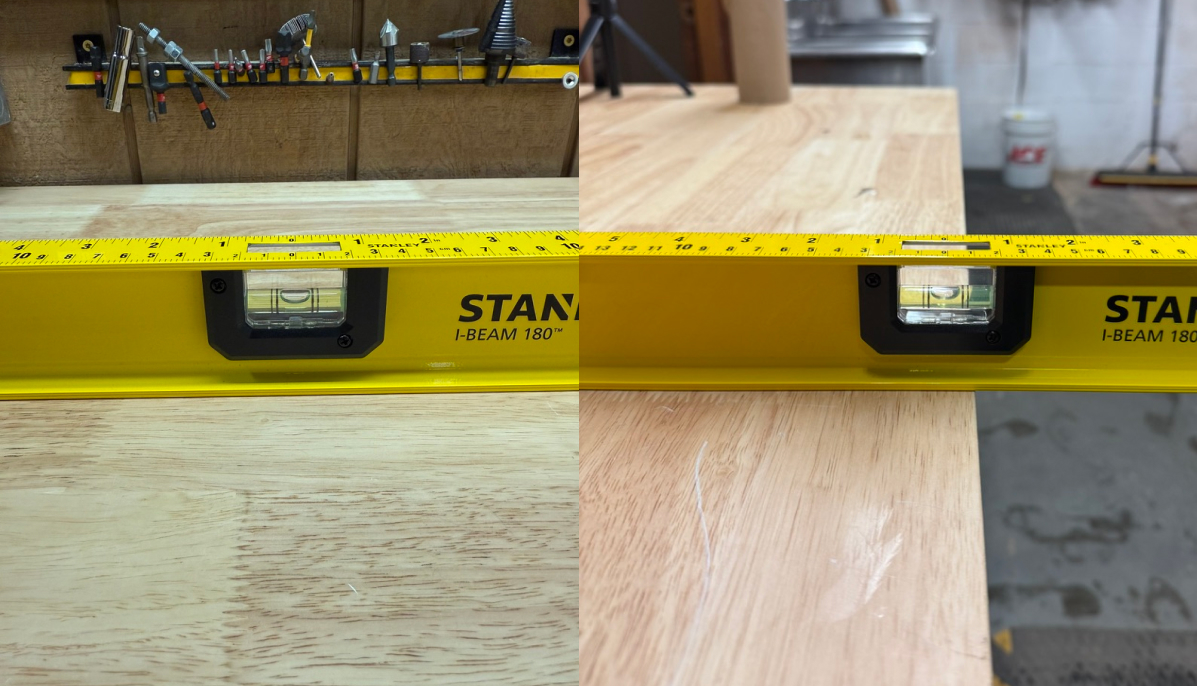
A clean, level surface is essential for successful potting. Even a small tilt will cause the potting compound to flow toward one end, changing the thickness over the sensors (and therefore their thermal response). It can also cause the compound to overflow and bond the string to the bench.
Verify the Bench Is Level
Check X and Y level using the bubble level. If the bench is unlevel or unstable, adjust it.
Wrap the Surface with Painters Paper
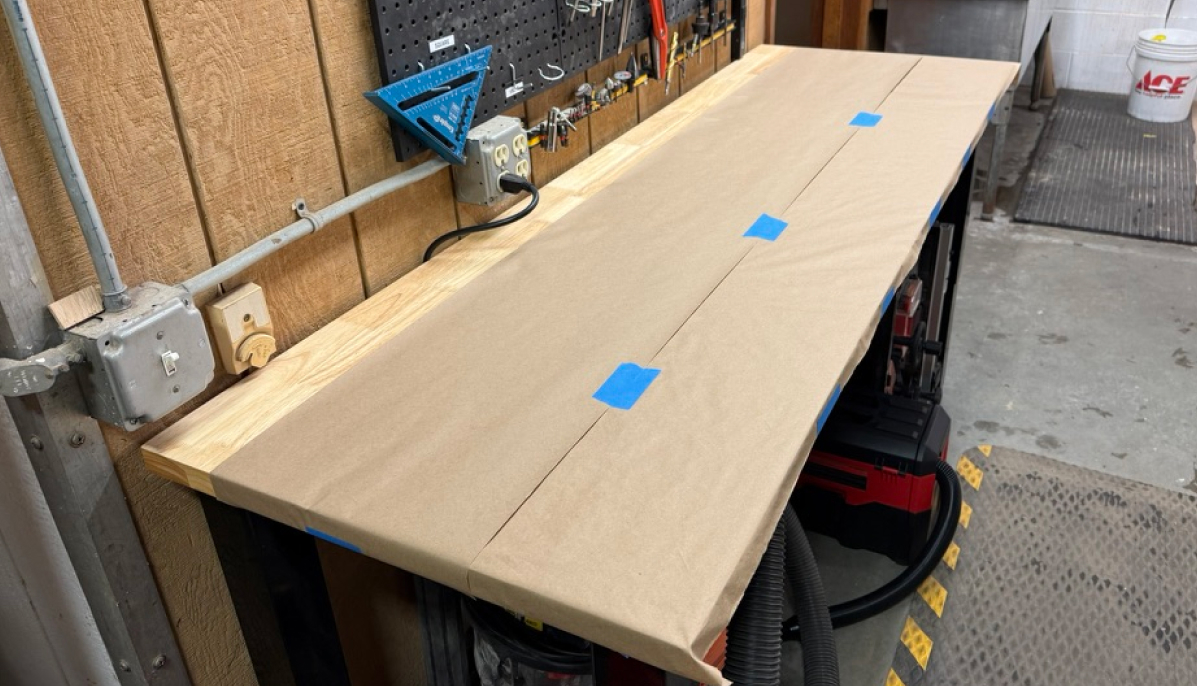
With the bench level, wrap the surface with brown painters paper and secure it with masking tape. Wrap and secure the ends so the paper can't bunch up — bunching can cause strings to rise and pot unevenly.
Lay Out the Strings
Place up to 6 string assemblies on the bench. Make sure each lies flat — pay extra attention to the top end, where the harness wires can entangle.
Mix Epoxy, Hardener, and Dye
In a clear plastic cup, mix 7 pumps of epoxy with 7 pumps of hardener. Add white dye and stir for at least one minute. The dye doubles as a visual indicator of complete mixing.
Pour Epoxy onto the String
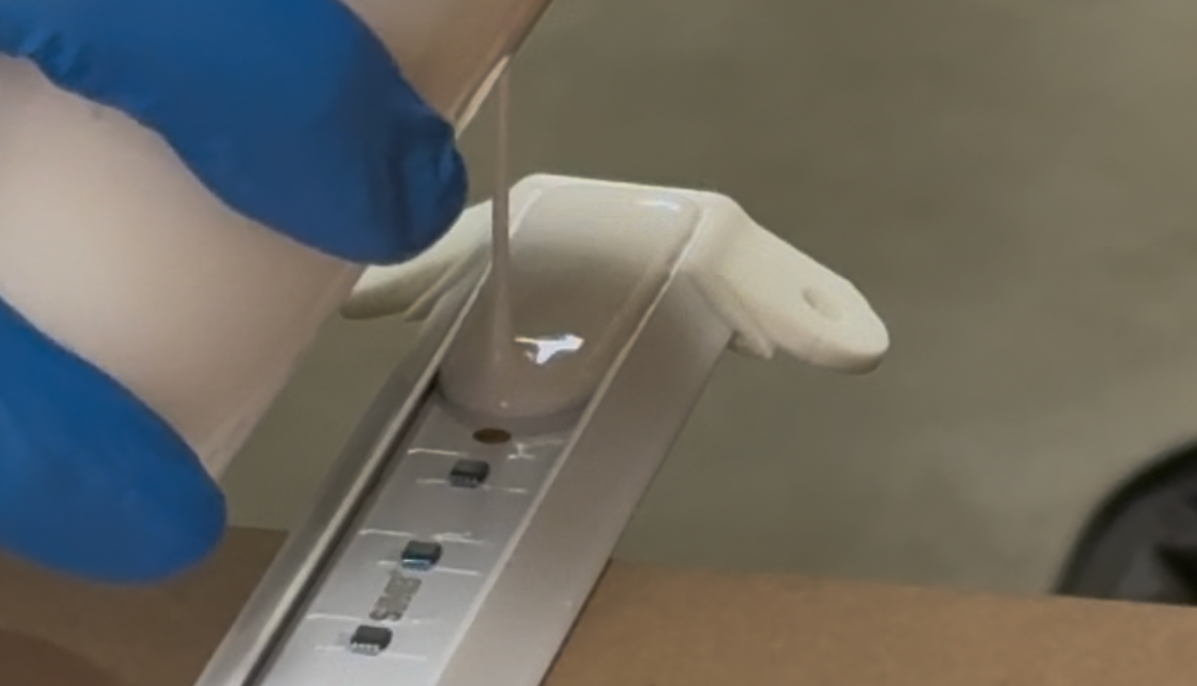
Starting from your preferred end, slowly pour epoxy along the length of the assembly. Don't over-pour — refer to the video for pacing.
When potting more than one string, start with the assembly placed farthest back on the bench. This keeps you from reaching over wet strings.
Remove Bubbles with a Trigger Torch
After pouring, sweep the trigger torch across the surface to pop any bubbles. Don't dwell in one spot.
Repeat for All Strings
Pour each remaining string. You'll likely need to de-bubble each one several times during the first 1-2 hours of curing.
Cure Time
Cure time is room-temperature dependent. The compound will gel within 30 minutes and fully cure in 24 hours. Strings can be handled after 12 hours.
Ideal potting temperature is at least 65 °F (18 °C). If you can, turn up the heat in the room to speed curing.
After curing is complete, the strings are ready for testing and mounting.